

7 Signs Your Car Battery Needs Replacing (and When It's Something Else)
Published · Updated
A failing bateri kereta usually gives warnings: slower starts, a battery light, dim lights, corrosion on the terminals, or a swollen case. Heat makes batteries age faster, so in Malaysia it pays to have yours tested once it is a couple of years old. But several of these signs can also come from the alternator, a loose connection or something draining power while the car is parked, so test before you replace.
The 7 signs
1. The engine cranks slowly
The starter turns over more lazily than usual, especially first thing in the morning or after the car has been parked for a few days. If you hear rapid clicking and the engine does not turn at all, the starter is not getting enough current. That is often the battery, but loose or corroded terminals and a worn starter motor can do the same.
2. The battery warning light stays on
The red battery symbol should light up when you switch on and go out once the engine is running. If it stays on, or comes on while driving, the car's voltage is outside its normal range. Battery-test maker Midtronics notes that this more often points to the charging system than to the battery itself: a failing alternator or voltage regulator, a slipping or broken drive belt, or loose and corroded connections. Replacing only the battery often does not fix it.
3. Dim lights and electrical glitches
Headlights that dim at idle and brighten when you rev, power windows that move slowly, an audio unit that resets its settings, or warning lights that flicker on and off can all mean the system is short of voltage. On cars with idle-stop, the engine may stop switching off at traffic lights, because many systems disable idle-stop when battery charge is low. Again, a tired alternator or a poor earth connection can cause the same symptoms.
4. Corrosion on the terminals
White, grey or blue-green crusty deposits on the terminals or clamps add resistance, so less current gets through when you start the car. Cleaning and tightening the connections sometimes cures a starting problem on its own. Heavy, recurring corrosion can also be a sign of a battery that is gassing or being overcharged. The deposits contain acid, so avoid touching them with bare hands.
5. A swollen, cracked or leaking case
Heat and overcharging can make a battery case bulge or leak. This battery needs replacing, and the charging voltage should be checked too, because overcharging may be what damaged it. Do not try to jump-start a battery in this condition.
6. It is getting old
Age alone does not tell you a battery is finished, but it tells you when to start paying attention. Look for a date code on the label or stamped into the case; formats differ between brands, so ask if you cannot read it. Consumer Reports suggests a yearly load test once a battery is two years old in a warm climate. A test shows how much life is left, which is more useful than guessing from a date.
7. You keep needing jump-starts
If the car goes flat after sitting overnight or for a few days, there are three usual suspects: a battery that can no longer hold charge, a charging system that is not refilling it, or a parasitic drain, meaning something keeps drawing power with the car locked. Dashcams on parking mode, aftermarket alarms, a boot or glovebox light that stays on and faulty modules are common culprits. A new battery will only hide a drain for a while.
Why batteries wear out faster in Malaysian heat
Most car batteries are lead-acid, and heat speeds up the reactions inside them. Higher temperatures accelerate corrosion of the internal grids, increase self-discharge and drive water out of the electrolyte. Midtronics estimates average battery life at around 40 months in hot climates against 55 months in cold ones; those are averages, not a promise for any single battery. The engine bay also runs much hotter than the air outside.
Driving habits add to it. Short trips in heavy traffic with the aircond, lights and wipers on give the alternator little time to put back what starting used. A car left parked for weeks slowly discharges, and a lead-acid battery that sits partly flat for long periods suffers sulfation, which permanently reduces its capacity.
Battery or alternator? What a proper test checks
Because the symptoms overlap, a proper check looks at the whole starting and charging system, not just the battery:
- Resting voltage with the engine off, which shows the state of charge.
- A load or conductance test, which compares the battery's cranking ability with the rating on its label. A battery can show normal voltage and still fail under load.
- Charging voltage with the engine running, at idle and with lights and aircond on, to see whether the alternator and regulator are doing their job.
- Drive belt, terminals and earth straps for wear, looseness and corrosion.
- A parasitic drain check if the battery goes flat while parked.
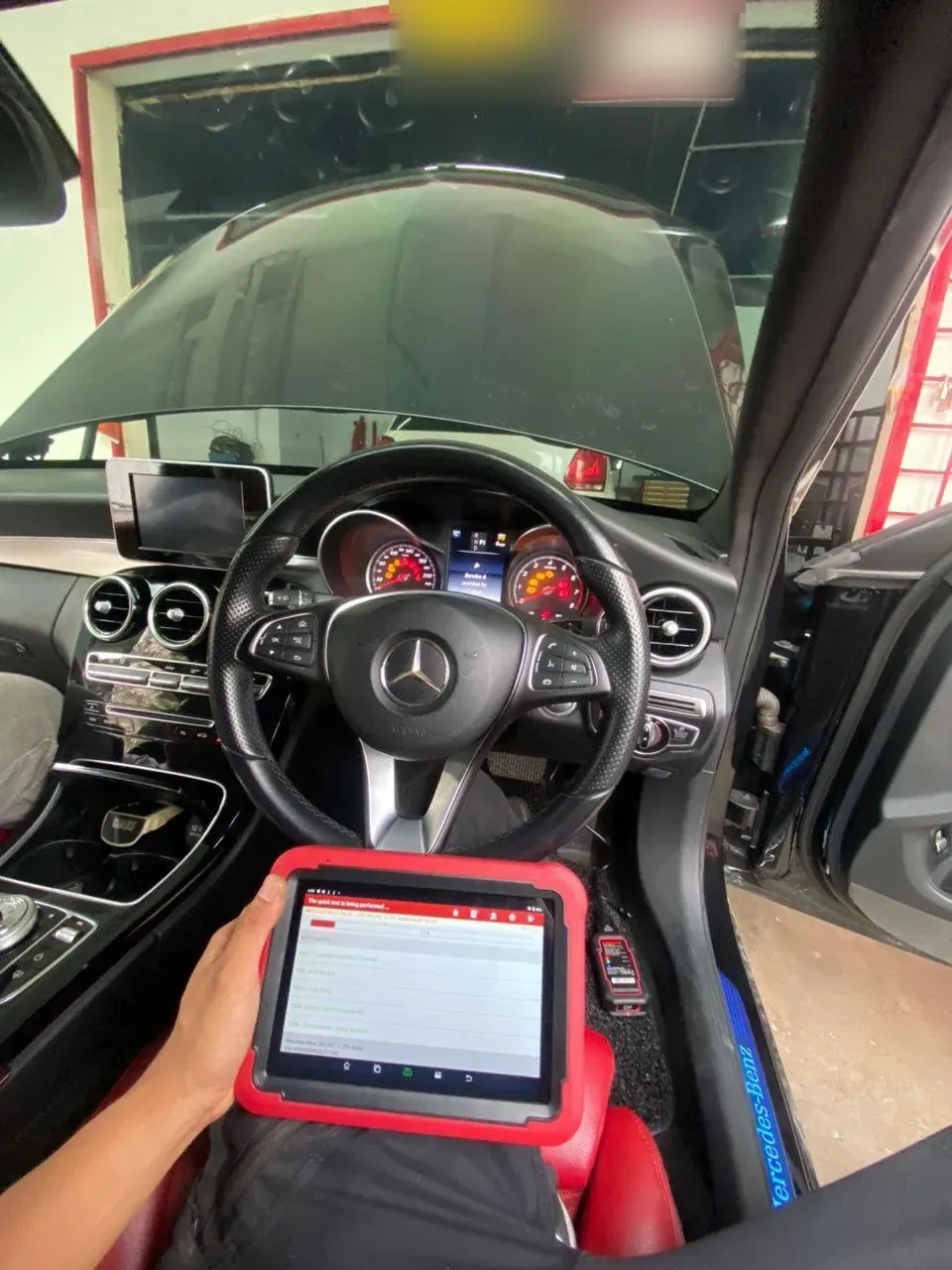
- A diagnostic scan for stored faults, on cars that monitor the battery electronically.
The Car Check electrical view shows how the battery, alternator, fuse box and engine computer connect, and its "battery keeps dying" symptom lists the parts usually involved.
Choosing the right replacement
Maintenance-free or conventional
Conventional ("wet" or top-up) batteries have removable caps so the electrolyte level can be checked and topped up with distilled water, which matters more in hot weather because water is lost faster. Maintenance-free batteries are sealed or low-maintenance and do not need topping up; most new cars leave the factory with one. Both are lead-acid, and "maintenance-free" does not mean check-free: the terminals, mounting and state of charge still matter.
Cars with idle-stop: EFB or AGM
If your engine switches off at traffic lights, it probably uses an EFB (enhanced flooded battery) or AGM (absorbent glass mat) battery built for frequent restarts. Battery maker VARTA advises replacing it with the same technology; an EFB can be upgraded to an AGM, but a conventional battery fitted in its place deteriorates quickly. Some cars, often European models, also need the new battery registered with the car's battery management system using a scan tool, so it is charged correctly.
Size, terminals and rating
The replacement should be the same physical size, with the positive terminal on the same side, a cranking rating at least equal to the original specification, and it must be held firmly by the clamp; vibration shortens battery life. A battery also ages on the shelf, so ask for fresh stock.
Jump-starting safely
- Check both owner's manuals first. Some cars have dedicated jump points under the bonnet, and the RAC advises against using a hybrid or electric car as the donor unless its maker permits it.
- Switch off both engines and all lights, aircond and accessories.
- Connect the red lead to the positive (+) terminal of the flat battery, then to the positive terminal of the good battery.
- Connect the black lead to the negative (−) terminal of the good battery, then to a bare, solid metal point on the engine or body of the car with the flat battery, away from the battery itself.
- Start the donor car, let it run for a few minutes, then start the other car. Remove the leads in reverse order without letting the clamps touch.
A successful jump does not solve the problem. A deeply flat battery may not fully recharge on a short drive, and if the alternator is the cause, the car can go flat again. Get the battery and charging system tested soon after.
What a battery replacement costs
The price depends on the battery type (conventional, maintenance-free, EFB or AGM), its size and capacity, the brand and warranty, and whether your car needs the new battery registered with a scan tool. It also depends on whether the battery is really the fault: a test can save you paying for one you did not need. Our quote estimator gives an estimated battery range for your make and model; the final price is confirmed once we know which battery your car takes.
Common questions
How long does a car battery last in Malaysia?
There is no fixed answer. Heat, short trips, long periods parked and the electrical load all shorten it, and battery quality varies. Rather than replacing at a set age, have it tested once a year from about two years old and replace it when the test, or the symptoms, say so.
The battery light came on but the car still starts. What now?
Get the charging system checked soon. The car can start fine on a healthy battery while the alternator is not recharging it, and it will run flat after enough driving. If the light comes on while you are driving, follow the warning above.
Will driving around recharge a flat battery?
Partly. The alternator is designed to keep a battery topped up, not to recover one that has gone completely flat, and in slow traffic with the aircond on there is little spare charge. A battery that has been fully drained is best recharged properly and then tested.
Sources
- Midtronics: Why hot temperatures reduce the lifespan of batteries
- Consumer Reports: How hot weather affects your car battery and what to do about it
- Midtronics: What the battery warning light could be telling you
- AAA: 5 signs your alternator may need to be replaced
- VARTA: Start-stop battery replacement
- RAC: How to jump start a car
- Kia owner's manual: Jump starting