

5 car warning signs you should not ignore, and when to stop driving
Published · Updated
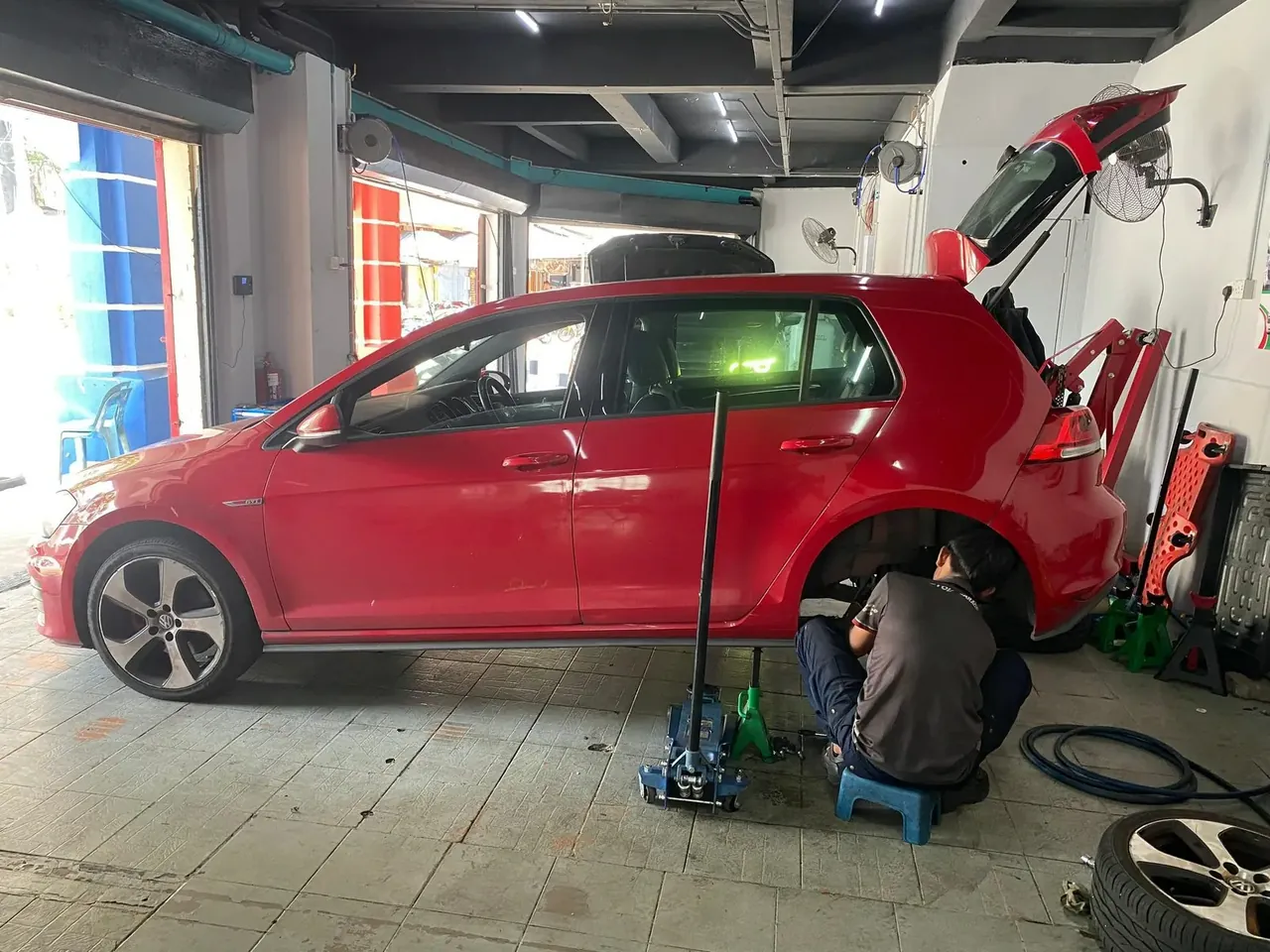
Most car problems give some warning before they leave you stranded: a dashboard light, a temperature gauge that creeps up, a new noise from the brakes, a puddle or a smell. Some of these mean stop as soon as it is safe. Others mean book an inspection soon. This guide helps you tell the two apart. It cannot diagnose your car, but it can help you avoid turning a small repair into a big one.
Stop now or book soon: a quick guide
| What you notice | What to do |
|---|---|
| Red warning light that stays on | Stop safely, engine off, check the owner's manual. Do not keep driving. |
| Temperature gauge in the red, steam, sweet hot smell | Stop, engine off, let it cool. Never open the radiator cap while hot. |
| Soft or sinking brake pedal, grinding when braking | Stop. Arrange a tow or have the car checked before driving further. |
| Flashing engine (check-engine) light | Ease off, and stop when safe. Get it checked straight away. |
| Steady amber light | Usually safe to drive gently to a workshop. Book a check soon. |
| Brake squeal, pulling, vibration when braking | Book an inspection within days, not weeks. |
| Small drip under the car | Note the colour and position, take a photo, and book a check. |
| Clear water under the front after using the aircond | Usually normal condensation. |
1. Dashboard warning lights
When you start the car, most lights come on for a moment as a self-test and then go out. That is normal. What matters is a light that stays on, or comes on while you are driving. Most cars use a colour code:
- Red means a serious fault or a safety problem. Stop as soon as it is safe. Common red lights are oil pressure, engine temperature, brake system and battery or charging.
- Amber or orange means something needs attention soon. The car can usually be driven carefully, but get it checked rather than waiting for the next service.
- Green or blue lights just show that a feature is on, such as headlights or cruise control.
Symbols and exact meanings differ between makes, so keep the owner's manual in the glovebox or a copy on your phone.
The lights that need the quickest action
- Oil pressure (red oil can): the engine may not be getting enough oil. Stop and switch off. Once the car has stood for a few minutes on level ground, check the dipstick. If the level is fine and the light stays on, do not drive it; low pressure can wreck an engine within minutes. See our engine oil guide for how to check it.
- Engine temperature (red thermometer): the engine is overheating. See section 2.
- Brake warning (red circle with "!" or "BRAKE"): it may simply be the handbrake. If the handbrake is fully off and the light stays on, brake fluid may be low, which can mean worn pads or a leak. If the ABS light is on at the same time, stop when safe.
- Battery or charging (red battery symbol): despite the symbol, this usually means the battery is not being charged, often because of the alternator, its drive belt or wiring. The car will run on the battery for a limited time and then stop. Read our battery guide for how to tell a battery fault from a charging fault.
- Engine or check-engine light (amber engine outline): the engine computer has stored a fault. A steady light is usually not an emergency, but the car may run poorly or use more fuel. A flashing engine light is more serious: many owner's manuals describe it as a misfire bad enough to overheat and damage the catalytic converter. Reduce speed and load, and get it checked straight away.
What a workshop does with a warning light
A diagnostic scan reads the fault codes the car has stored. A code tells the technician which circuit or system reported a problem, not which part to replace. For example, a misfire code can come from a spark plug, an ignition coil, an injector, a vacuum leak or low compression. Good diagnosis uses the code as a starting point, then tests the suspect parts. You can explore what sits behind each light on our Car Check page.
2. Overheating: temperature gauge, steam or a sweet smell
Malaysian heat and slow traffic put cooling systems under real load. A car that is fine on the highway can overheat in a crawling jam on the MRR2 or in Jalan Ipoh traffic at midday, because at low speed there is little air pushed through the radiator and the cooling fan has to do the work. Watch for:
- the temperature needle rising above its usual position, or a red temperature light
- steam or vapour from under the bonnet
- a sweet, syrupy smell (hot coolant)
- the aircond getting warmer in traffic, which can go together with a cooling problem
- coolant level dropping in the reservoir between checks
Common causes
Overheating has several possible causes, and topping up only treats the result:
- Low coolant from a leak: a hose, the radiator, the water pump seal, the reservoir or a loose clamp. The cooling system is sealed, so a level that keeps dropping means coolant is going somewhere.
- Radiator fan not working: a failed fan motor, relay, fuse or temperature switch. The classic sign is overheating in traffic but not at speed.
- Thermostat stuck closed: coolant cannot reach the radiator properly.
- Water pump fault: a worn impeller or bearing, or a leak from the pump. On some engines a slipping or broken drive belt also stops the pump.
- Radiator blocked or damaged: internal scale or external dirt and debris between the radiator and the aircond condenser.
- Faulty radiator or reservoir cap: the system cannot hold pressure, so coolant boils more easily.
- Head gasket problems: less common, but possible, especially after the engine has already overheated badly.
What to do if your car overheats
- Switch off the aircond and pull over as soon as it is safe.
- Switch off the engine. Driving on, even for a short distance, can turn a hose or fan repair into engine damage.
- Do not open the radiator cap or the coolant reservoir cap while the engine is hot. The system is under pressure, and hot coolant can spray out and cause serious burns.
- Wait at least 30 minutes, longer in hot weather, until the engine and bonnet are cool to touch.
- Once cool, check the coolant level and look underneath for drips. Do not pour cold water over a hot engine.
- If the level was low and you top up with plain water to reach a workshop, tell the mechanic, as the mixture will need correcting. If the car overheats again, or you can see a leak, have it towed.
At the workshop, a cooling system check usually includes a pressure test for leaks, checking that the fan switches on at the right temperature, the thermostat and water pump, the coolant condition and, if needed, a test for combustion gas in the coolant. The cooling diagram on our Car Check cooling view shows how these parts connect.
3. Brakes that sound or feel different
Brake noises are worth understanding, because some are harmless and some mean the brakes are close to failing. The same sound can also have more than one cause.
| Symptom | Possible causes | Urgency |
|---|---|---|
| High-pitched squeal while driving or when braking lightly | Pad wear indicator touching the disc, glazed pads, brake dust, new pads bedding in | Book soon |
| Grinding or harsh metal-on-metal noise | Pads worn down to the metal backing, damaging the disc; a stone caught in the brake | Stop driving |
| Car pulls to one side when braking | Sticking caliper, uneven or contaminated pads, a fluid leak at one wheel, tyre pressure or alignment | Book soon |
| Shaking in the pedal or steering when braking | Uneven disc surface or thickness (often called warped discs), worn suspension parts | Book soon |
| Soft, spongy or sinking pedal | Air in the system, a fluid leak, low fluid, a failing master cylinder | Stop driving |
| Burning smell after driving, one wheel very hot | Brake dragging (caliper not releasing) or the handbrake left on | Stop and check |
A light scraping sound for the first few stops after rain or a car wash is usually surface rust on the discs and goes away quickly. A noise that stays is worth checking.
A brake inspection measures the pad and disc thickness against the minimum, checks the calipers and slide pins, looks for leaks along the lines and hoses, and checks the fluid level and condition. You can see the parts involved on our Car Check brakes view.
4. Leaks and smells
Puddles under the car
Put a sheet of white paper or cardboard under the engine overnight, then note the colour, the position (front, middle, under a wheel) and the smell. Take a photo. Colour is a useful hint, not a diagnosis: fluids darken with age, and coolant is sold in several colours.
| Colour and feel | Could be | Notes |
|---|---|---|
| Clear, like water, no smell | Aircond condensation | Normal after using the aircond, especially in humid weather |
| Green, pink, orange, blue or yellow, slightly sweet smell | Coolant | Watch the temperature gauge and coolant level |
| Amber to dark brown or black, slippery | Engine oil, sometimes gearbox oil | Check the dipstick; oil on a hot exhaust can smoke |
| Red or reddish brown, oily | Automatic gearbox fluid (ATF) or power steering fluid | Position helps tell them apart |
| Clear to yellowish brown, slippery, near a wheel | Brake fluid | Treat as urgent; do not drive until checked |
| Smells of petrol or diesel | Fuel leak | Do not start the engine; fire risk |
Smells you should not ignore
- Sweet, syrupy smell: coolant, from a leak in the engine bay or, if you smell it inside and the windscreen fogs up, possibly the heater core behind the dashboard.
- Burning oil: oil dripping onto the hot exhaust, often from a leaking gasket.
- Hot, sharp burning smell near a wheel: a dragging brake or the handbrake left on. In manual cars, a slipping clutch smells similar.
- Burning rubber: a slipping drive belt, or a loose hose or wire touching something hot.
- Burning plastic or electrical smell: overheated wiring. Stop, switch off and get out; electrical faults can start fires.
- Rotten eggs: often linked to the catalytic converter or the engine running too rich. Book a check soon.
- Exhaust fumes inside the cabin: a leaking exhaust can let carbon monoxide in. Open the windows and get it checked quickly.
Our Car Check burning-smell guide lists the parts most often involved.
5. Steering, vibration and new noises
- Steering suddenly heavy: on hydraulic power steering, low fluid, a failing pump or a slipping belt; on electric power steering, a fault in the system, usually with a warning light. A very low tyre also makes steering heavy.
- Steering wheel shakes at certain speeds: wheels out of balance, a damaged tyre or bent rim, or worn steering and suspension joints.
- Car pulls to one side while driving: wheel alignment, uneven tyre pressure, a dragging brake or worn suspension parts.
- Clunks over bumps and potholes: worn suspension links, bushes, absorber mounts or anti-roll bar links.
- Squeal when starting the engine or turning the steering at full lock: often a worn or loose drive belt.
- Knocking from the engine that gets faster with engine speed: stop and check the oil level. Do not keep driving.
Check tyres first: look for bulges on the sidewall and check the pressures against the label in the driver's door frame. A bulge means the tyre should be replaced before you drive any distance. For pulling or a bumpy ride, see the suspension parts on our Car Check suspension guide.
Symptoms are not a diagnosis
The lists above give likely areas, not answers. A good workshop confirms the cause before replacing anything: a road test to reproduce the symptom, a diagnostic scan where it helps, a look under the car on a lift, and measurements or pressure tests. Be cautious of anyone who quotes for parts based only on a description over the phone.
When you bring the car in, it helps to note when the problem happens (cold start, after a long drive, in traffic, when braking, when turning), how long it has been going on, and any photos of leaks or lights.
What affects the repair cost
We do not list prices for "fixing a warning sign", because the cost depends on what the inspection finds. The main factors are:
- the actual cause, found by inspection and testing
- the make, model and engine of the car, and whether parts are genuine or quality aftermarket
- labour time, which varies a lot between cars for the same job
- whether further damage happened from driving on, which is why stopping early often costs less
For common jobs such as brake pads, discs, a radiator or a water pump, our online estimator gives a guide range for your car. The final price is confirmed after a free inspection, before any paid work starts.
Common questions
Can I drive with the engine light on?
If it is steady and the car drives normally, you can usually drive carefully to a workshop, but do not leave it for weeks. If it is flashing, or the car is shaking, losing power or overheating, stop when it is safe.
Is it OK to top up the radiator with plain water?
In an emergency, once the engine is fully cool, water can get you to a workshop. It is not a long-term fix: coolant raises the boiling point and protects against corrosion, and a level that keeps dropping means there is a leak to find.
My car only overheats in traffic jams. Why?
At speed, moving air cools the radiator. In slow traffic the radiator fan does that job, so a weak or non-working fan, its relay or fuse, or a radiator clogged with dirt often shows up only in jams. Low coolant can do the same.
Is water dripping under my car normal?
Clear, odourless water from under the front of the car after using the aircond is condensation and is normal. If it is coloured, slippery or smells, or if water drips inside the footwell, have it checked.
Sources
- RAC: Dashboard warning lights guide, red, amber and green symbols explained
- NRMA: What do the warning lights on my car dashboard mean?
- RAC: What should I do if my car is overheating?
- RACQ: What to do if your engine overheats
- AAA: Car overheating, 8 causes and solutions
- NAPA Know How: Noisy brakes, telltale signs of trouble you shouldn't ignore
- AAA Club Alliance: Identify car leaks like a pro
- RAC: Car smells guide, causes and solutions